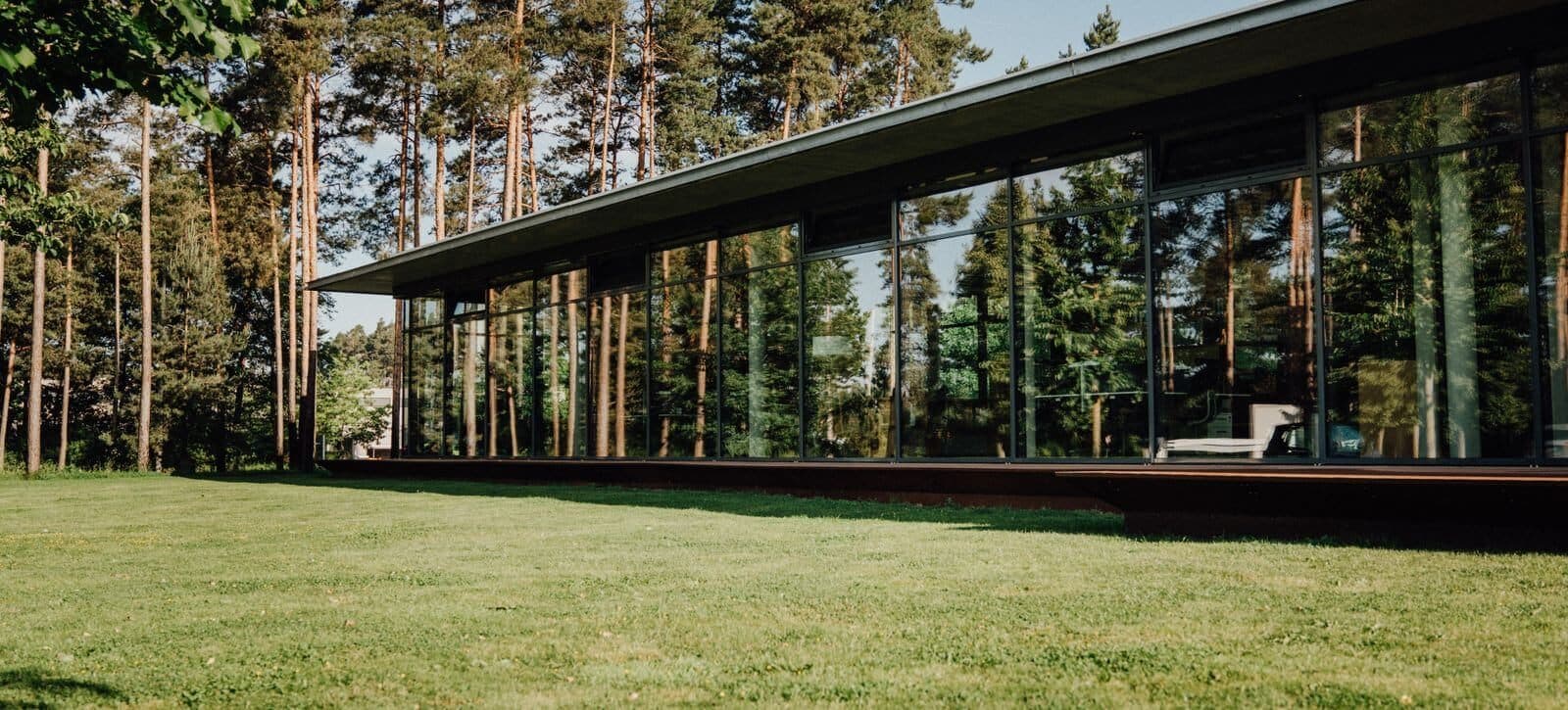
Mangelberger headquarters in Roth, set in the forest

Green Panel

for switchgear with an optimised product carbon footprint (PCF)

As part of our GREEN PANEL® concept, we offer interested customers the opportunity to benefit extensively from sustainable switch cabinet production and a circular economy in switchgear manufacturing.

  • Decide what share of renewable energy we should use to manufacture your switchgear. Depending on the delivery time, we can produce your switchgear exactly when the yield of our solar plant covers this energy demand 100 %.
  • Benefit from our AI-based production. Specify what percentage of endlessly usable, circular components you would like to integrate into your new switchgear – and so reduce your purchase costs while significantly improving the product carbon footprint (PCF).
  • We provide the composition of your system-specific PCF both on the rating plate and in separate datasheets. Clearly structured and broken down in line with the standard.

Love this planet? Feel free to get in touch.

Contact us now

Video stoppen

Ecology in switchgear manufacturing

Responsibility begins with creation.

For us, sustainability does not start with energy consumption, but as early as the development, choice of raw materials and design of our switch cabinets. We regularly question even established materials, production processes and product life cycles, precisely because we have recognised that a wide range of ecological optimisations is possible in switchgear manufacturing, too.

Our approach is simple: energy and raw materials we never need in the first place do not have to be laboriously offset later. Resources we do not consume do not have to be replaced. And anything that can be repaired or reused does not belong in the bin.

That is why we develop economical, resource-saving and circular solutions that combine our ecological responsibility with technical and economic good sense.
DIN EN ISO 14067

Product carbon footprint

We use established methods to collect the production data of our switchgear. Since 2022, we have been certified as a company to DIN EN ISO 14064-1 – and since 2024, we have supplied our customers with the product carbon footprint (PCF) to DIN ISO 14067 for every single switchgear assembly on request.

Components are scanned before their automated assembly in order to determine product-related raw material compositions and document places of manufacture and transport routes. This allows us to provide our customers with cradle-to-cradle or cradle-to-grave information: on raw material shares, CO₂ equivalents, energy inputs, reuse, repair, recycling or even deforestation-free supply chains. At the push of a button and certified by third parties.

Whether “cradle to cradle” … or “cradle to grave”.

Of course, we are also continuously working to further optimise the PCF of our switchgear. By integrating “green” steel and endlessly reusable components – and through ongoing re-engineering of CO₂-intensive components:

Days of sunshine, the position of the sun, times of day and battery storage capacities are built into our automated production planning, as are requested delivery dates and delivery locations. Why? Because every switchgear assembly we can deliver as part of an AI-coordinated route really does save a great deal of CO₂ transport emissions.

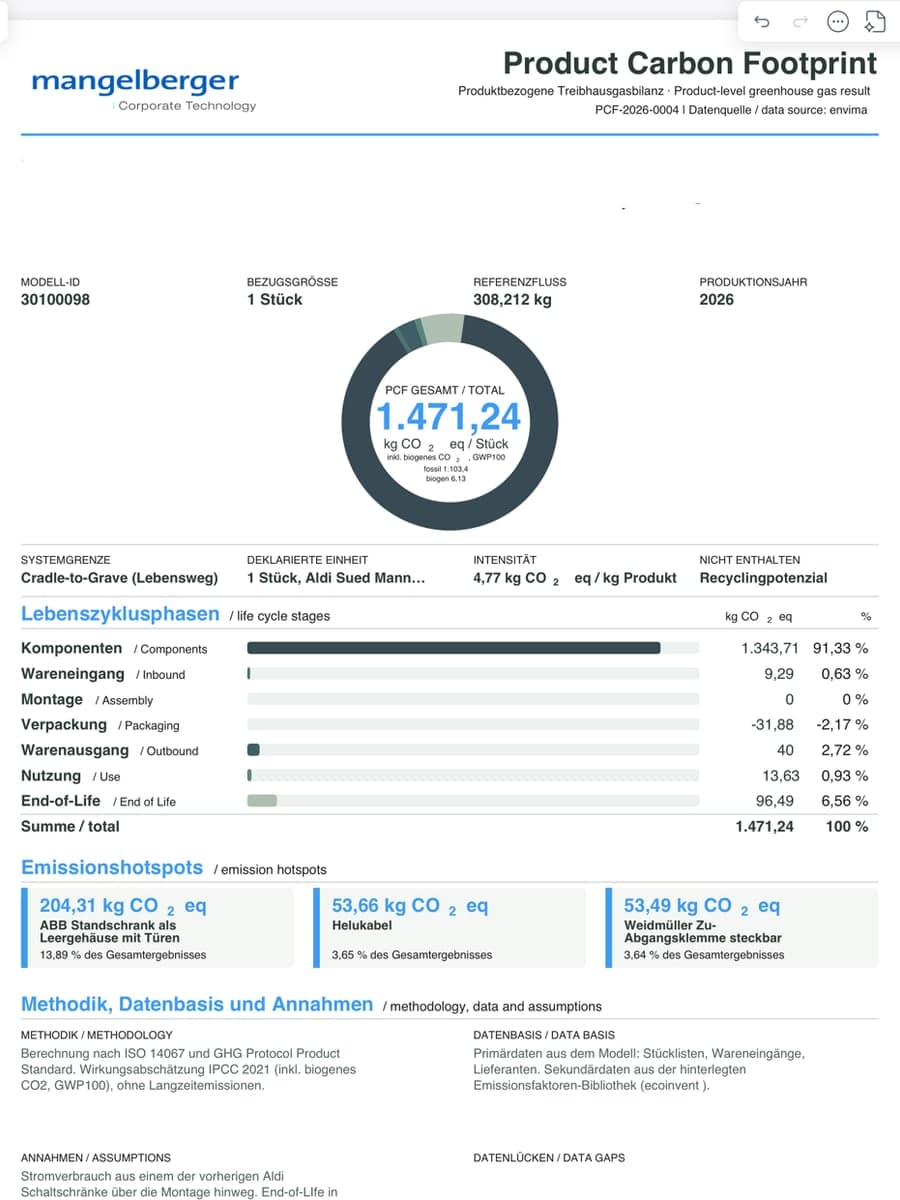
Datasheet on the product carbon footprint of a Mangelberger switchgear assembly
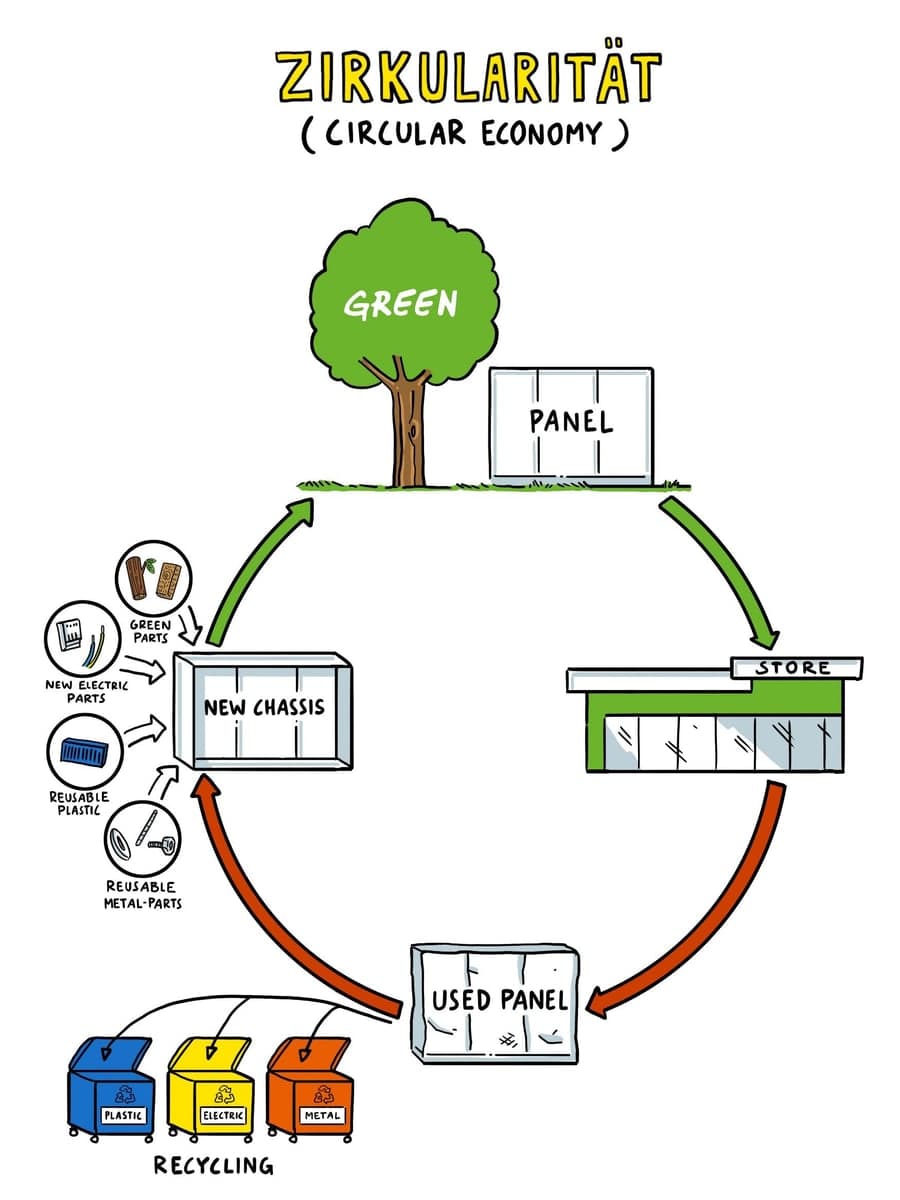
“Circularity” graphic: the cycle of a switchgear assembly from green panel to used panel

Circular economy

Our switch cabinets are green

At Mangelberger, we asked ourselves: what happens when manufacturers can no longer manufacture because raw materials are lacking? When plastic granulate, steel, silver or copper are not available? When even our six-month stock of materials runs out because terminals cannot be produced without plastic and switching relays cannot be produced without copper?

Impossible? We’ve been there. During the coronavirus pandemic.

Mangelberger introduced circularity for switchgear in 2021. Since then, we have been offering our customers the buy-back of our switch cabinets after their end-of-use time in order to …

  • … use endlessly usable metal parts, copper busbars or cable pull systems endlessly
  • … recycle metal enclosures, steel plinths and incoming and outgoing terminals instead of disposing of them
  • … granulate plastic parts such as spacers to obtain components for new switchgear
  • … refresh hardware so that firmware and security updates give it a second lifetime
  • … continuously improve the product carbon footprint of our switch cabinets
  • … pursue innovative ecological and economic paths in a unique way
  • … improve our customers’ carbon footprint through less scrapping and more circularity

In consultation with the customer, both the dismantled metal parts and the regranulated plastic parts are fitted into new or refurbished switchgear. Not at the price of new parts, of course … but at their residual value. And with a full warranty.

Woody Case

The switch cabinet made of wood

Woody Case grows with its challenges. Individually pieced together from standardised wooden elements, from wall-mounted distribution boards to individual floor-standing distribution boards. The newly conceived switch cabinet enclosure is made of standardised wooden parts that bind CO₂. Woody Case therefore even supports the goal of net zero in switchgear with a CO₂-negative balance.

A vision? Of course not! Our Woody Cases have been in use in green buildings for years – with a degree of protection up to IP44 and heat-resistant to DIN EN IEC 61439-1 / IEC 60695-2-1 up to 850 degrees.

And at end of use? Woody Case is already ready for its next life. With extended ecological use: the wooden enclosure can be flexibly dismantled and, without changing any parts, reassembled, for example as a child’s bed, single bed, double bed or bunk bed.

Find out more
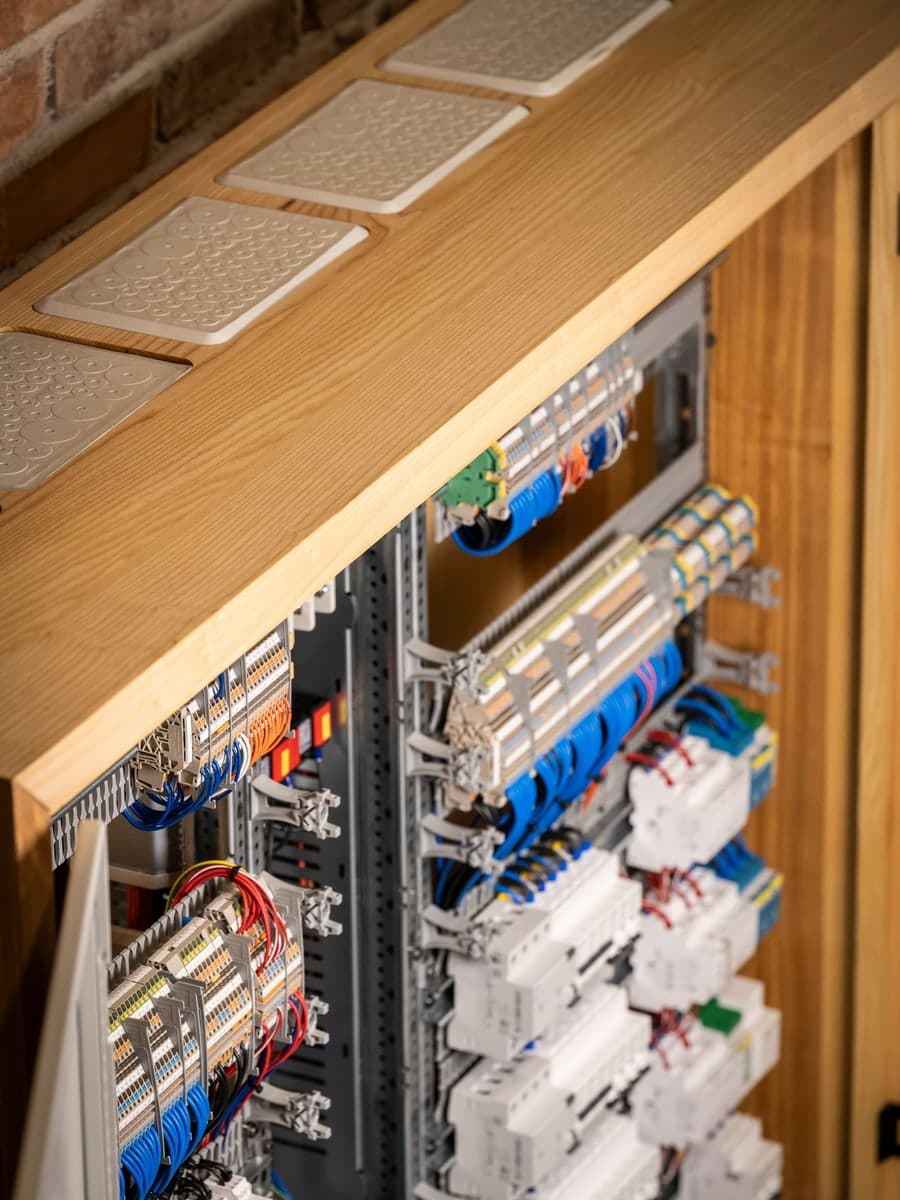
Woody Case: open switch cabinet with a wooden enclosure

Frequently asked questions about ecology in switchgear manufacturing

What is a product carbon footprint needed for?

A product carbon footprint (PCF) per switch cabinet is needed to make the climate impact of this product measurable. It shows the greenhouse gas emissions in CO₂ equivalents – depending on the system boundary, from the extraction of raw materials through manufacturing, processing and transport to use and disposal.

Why can Mangelberger offer such comprehensive circularity?

Because we have been manufacturing our standardised switchgear with deliberately low component variance for decades. Despite ongoing optimisation, essential metal parts have never been changed. That is why almost 100 % of the non-electrical components we have used since 1994 fit into current switchgear: from DIN rails through mounting frames, mounting plates and spacers to busbar supports or modular wiring combs.

What does “sustainable smart manufacturing” mean in switch cabinet manufacturing?

For us, “sustainable smart manufacturing” means above all the circularity of the components we develop and the components we buy in. Contrary to the trend of launching new products at ever shorter intervals, Mangelberger invests in the philosophy of “Upgrade Existing Device” (UED).

What happens to the wooden parts of Woody Case after a switchgear assembly is returned?

As part of extended material use, our standardised wooden switch cabinet parts can be dismantled without tools, separated and then transformed into furniture such as single beds, double beds, children’s beds or bunk beds. Here, too, Mangelberger offers added value at no extra cost: for us … and for our environment.

What is the prerequisite for a high degree of circularity in switch cabinet manufacturing?

When developing new components, we at Mangelberger look not only ahead but also back. So that we can integrate the components that come back to us into new switchgear: for example, newly developed cover holders with optimised use of raw materials fit both our current covers – and the covers we used thirty years ago.

What do our customers gain from circularity and sustainability in switch cabinet manufacturing?

Switch cabinets manufactured by Mangelberger combine ecological and economic benefits: on request, we integrate reusable components at reduced prices instead of the price of new parts – with a full warranty. This lowers your purchase price and improves both the product carbon footprint (PCF) of your system and your corporate carbon footprint (CCF). You decide the share of circular components yourself. On request, you also receive a system-specific carbon footprint to DIN ISO 14067 that documents the climate balance of your switchgear transparently. And after the end of use, our return concept makes it possible to reuse valuable components. This turns circularity into real added value for you.

We’re here!

Are you interested in sustainable solutions and CO₂-neutral production in switchgear manufacturing? Just get in touch.